General Info :
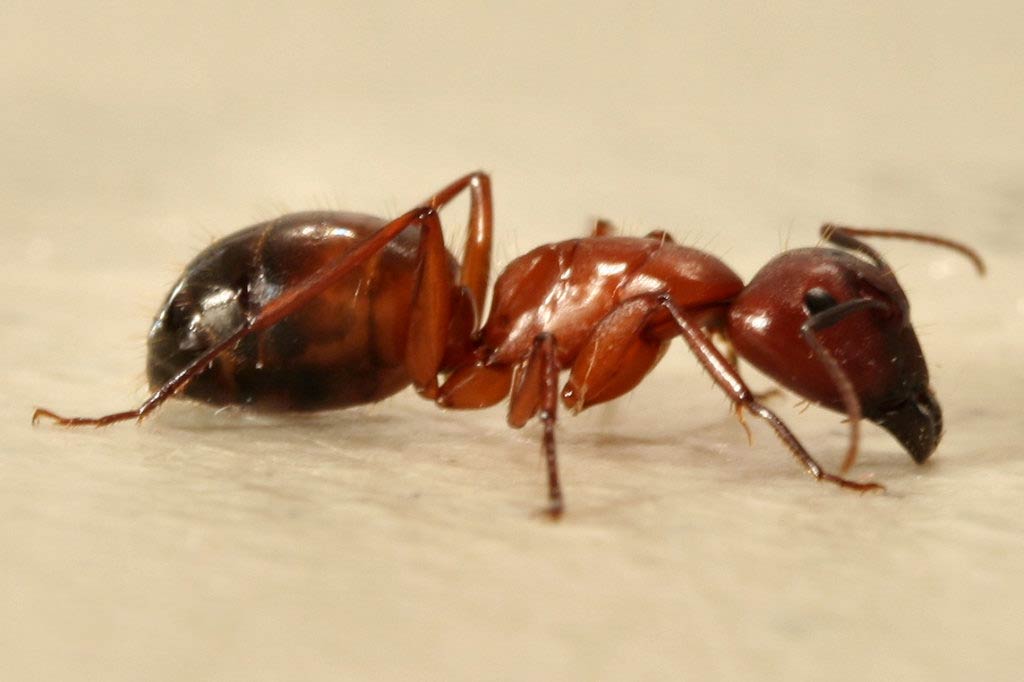
Ants are social insects of the family Formicidae and, along
with the related wasps and bees, belong to the order Hymenoptera. More than
12,500 out of an estimated total of 22,000 species have been classified. They
are easily identified by their elbowed antennae and a distinctive node-like
structure that forms a slender waist.
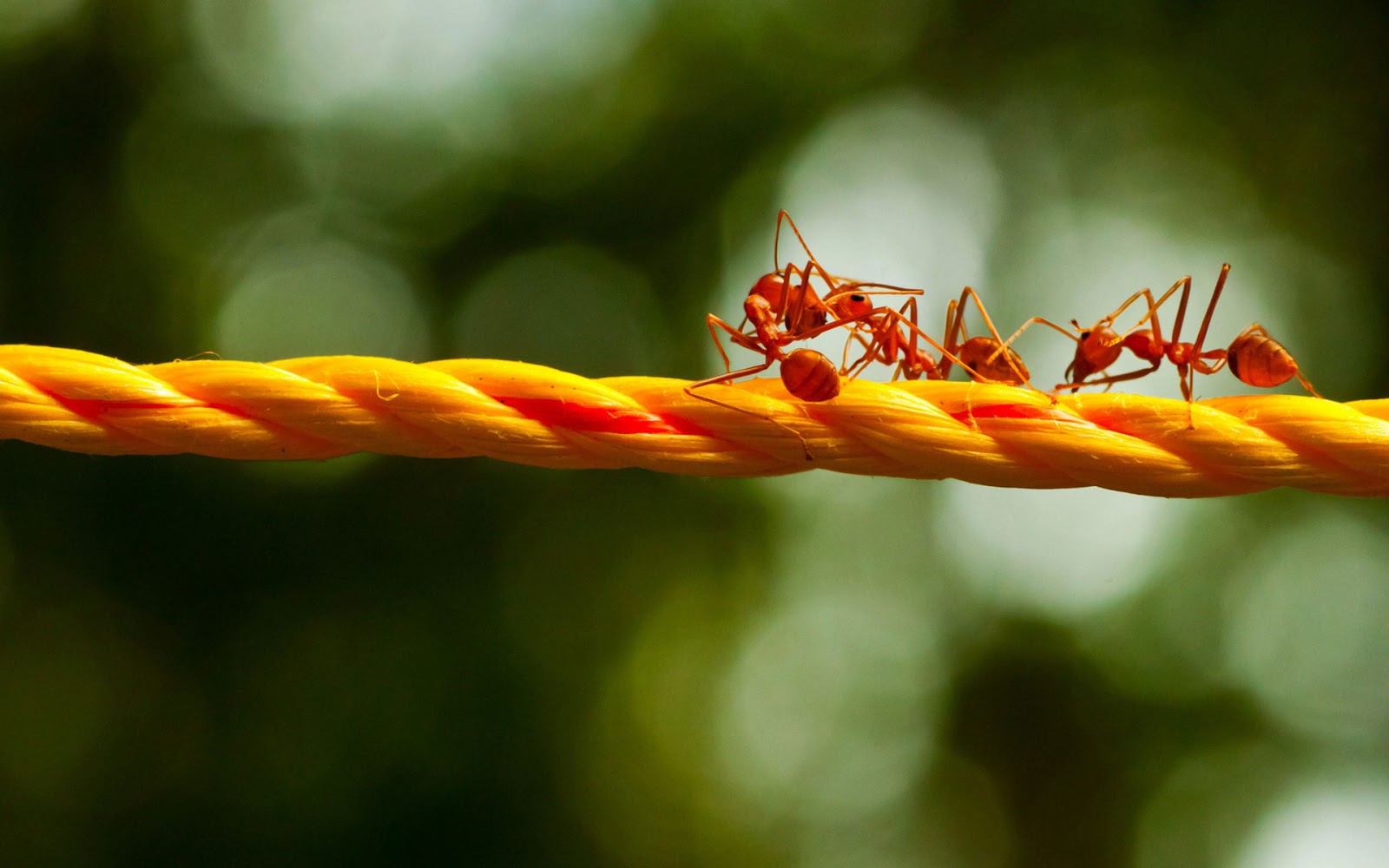
Ants form colonies that range in size from a few dozen predatory individuals
living in small natural cavities to highly organised colonies that may occupy
large territories and consist of millions of individuals. Larger colonies
consist mostly of sterile wingless females forming castes of
"workers", "soldiers", or other specialised groups. Nearly
all ant colonies also have some fertile males called "drones" and one
or more fertile females called "queens". The colonies sometimes are
described as superorganisms because the ants appear to operate as a unified
entity, collectively working together to support the colony.
Physique :
Ants range in size from 0.75 to 52 millimetres
(0.030–2.0 in), the largest species being the fossil Titanomyrma giganteum, the queen of
which was 6 centimetres (2.4 in) long with a wingspan of 15 centimetres
(5.9 in). Ants vary in colour; most ants are red or black, but a few
species are green and some tropical species have a metallic lustre. More than
12,000 species are currently known (with upper estimates of the potential
existence of about 22,000), with the greatest diversity in the tropics.
Taxonomic studies continue to resolve the classification and systematics of
ants. Online databases of ant species, including AntBase and the Hymenoptera
Name Server, help to keep track of the known and newly described species.
Diet :
Most ants are generalist predators, scavengers, and indirect
herbivores, but a few have evolved specialised ways of obtaining nutrition. Leafcutter
ants (Atta and Acromyrmex) feed exclusively on a fungus
that grows only within their colonies. They continually collect leaves which
are taken to the colony, cut into tiny pieces and placed in fungal gardens.
Workers specialise in related tasks according to their sizes. The largest ants
cut stalks, smaller workers chew the leaves and the smallest tend the fungus.
Leafcutter ants are sensitive enough to recognise the reaction of the fungus to
different plant material, apparently detecting chemical signals from the
fungus. If a particular type of leaf is found to be toxic to the fungus, the
colony will no longer collect it. The ants feed on structures produced by the
fungi called gongylidia. Symbiotic
bacteria on the exterior surface of the ants produce antibiotics that kill
bacteria introduced into the nest that may harm the fungi.
Distribution:
Ants are found on all continents except Antarctica, and only a few large
islands such as Greenland, Iceland, parts of Polynesia and the Hawaiian Islands
lack native ant species. Ants occupy a wide range of ecological niches, and are
able to exploit a wide range of food resources either as direct or indirect
herbivores, predators, and scavengers.